
You Can Finish Airline School in Japan, Online or In a Classroom, Without Ever Really Speaking English. That’s the Problem.
Japanese cabin crew airline schools, whether they run entirely online or meet in a classroom in Tokyo or Osaka, share the same structural weakness. They teach English as a subject, inside Japan, on a Japanese schedule. It’s convenient, or at least familiar. What neither format does is the one thing an international airline interview actually tests, whether you can function in English when it isn’t a lesson.
At a glance
- Any CA school based in Japan online or in-person teaches English as a subject: scheduled lessons or classroom hours, then back to Japanese for the rest of the day
- Training in Malaysia makes English the default language of daily life for the full programme, ordering food, messaging classmates, living with an international roommate
- International airline interviews are conducted entirely in English, by recruiters assessing composure in an unfamiliar setting, not textbook grammar
- A Crew Lounge graduate’s own words: arrived at beginner-to-intermediate English, closed the gap through total immersion, not extra classroom hours
- The honest claim: classroom English caps out at classroom hours. Immersion doesn’t.
What English Training in Japan, Online or In-Person Actually Trades Away.
Neither format is wrong to exist. Online courses solve a real problem for students who can’t relocate, and a physical school in Tokyo or Osaka offers structure many students genuinely need. Both are real advantages, worth naming honestly rather than dismissing.
What neither one solves is exposure. A student logging into an English lesson twice a week or sitting in a Japan-based classroom a few times a week, then spending the rest of the week living entirely in Japanese, is not building the same skill as a student whose default daily language is English, texting friends in it, ordering food in it, arguing about weekend plans in it.
What an International Airline Interview Actually Tests.
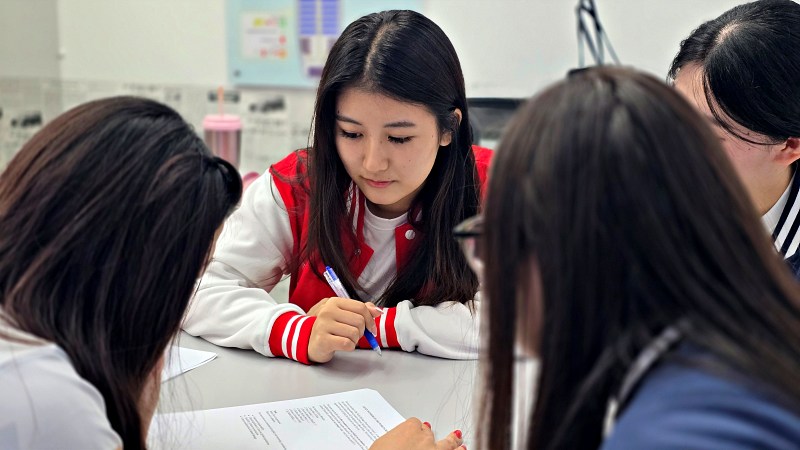
Qatar Airways, Emirates, Etihad, and Singapore Airlines don’t run their assessments in Japanese. Group exercises, English proficiency evaluation, and individual interviews are conducted in English, by recruiters trained to notice composure and natural communication, not memorized answers.
That’s a specific skill: functioning in English under mild pressure, in an unfamiliar room, without falling back on a scripted response. Classroom English, however well taught, is built around correct answers to known questions. It doesn’t train the part where the question is unexpected and there’s no time to translate in your head first.
What Immersion Actually Looks Like.
Crew Lounge students train in Malaysia, a genuinely multilingual country where English functions as an everyday working language, not a subject. That single fact changes the shape of a student’s day: English isn’t confined to lesson time, because it’s the language the country runs on.
One Crew Lounge graduate Kirari arrived at roughly B1-level English, able to follow a conversation, but struggling to speak. Her own account of closing that gap wasn’t extra classroom drilling. It was total immersion: shadowing YouTube videos, talking to herself in English, texting people she met while travelling, an English-only rule with her roommate outside of class.
“I basically tried to surround myself with English as much as possible.”
She went on to become the first Japanese student in Crew Lounge’s history to win Top Student at graduation and secured an offer from Singapore Airlines after a process that included six other airlines and eight months of interviews. The English gap she started with wasn’t closed by more lessons. It was closed by leaving no room in her day where English wasn’t the default.
The Honest Trade-Off.
Training in Japan, whether online or in a classroom, is cheaper in time and easier to fit around an existing life.
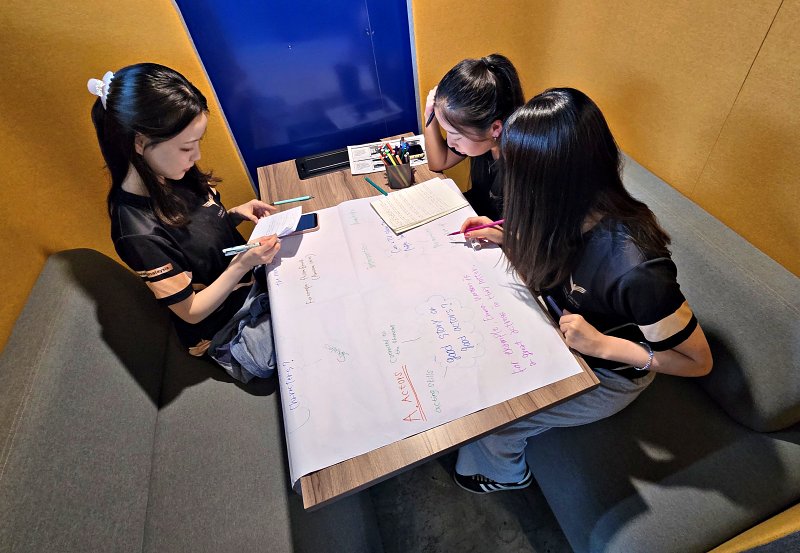
But if the goal is a specific outcome, an offer from an international airline whose entire hiring process happens in English, the method that trains for that outcome directly is the one built around living in English, not scheduling around it. Yuna and Mana and Rino built the same skill from different starting points, on their way to Emirates and Qatar Airways
The Crew Lounge Programme
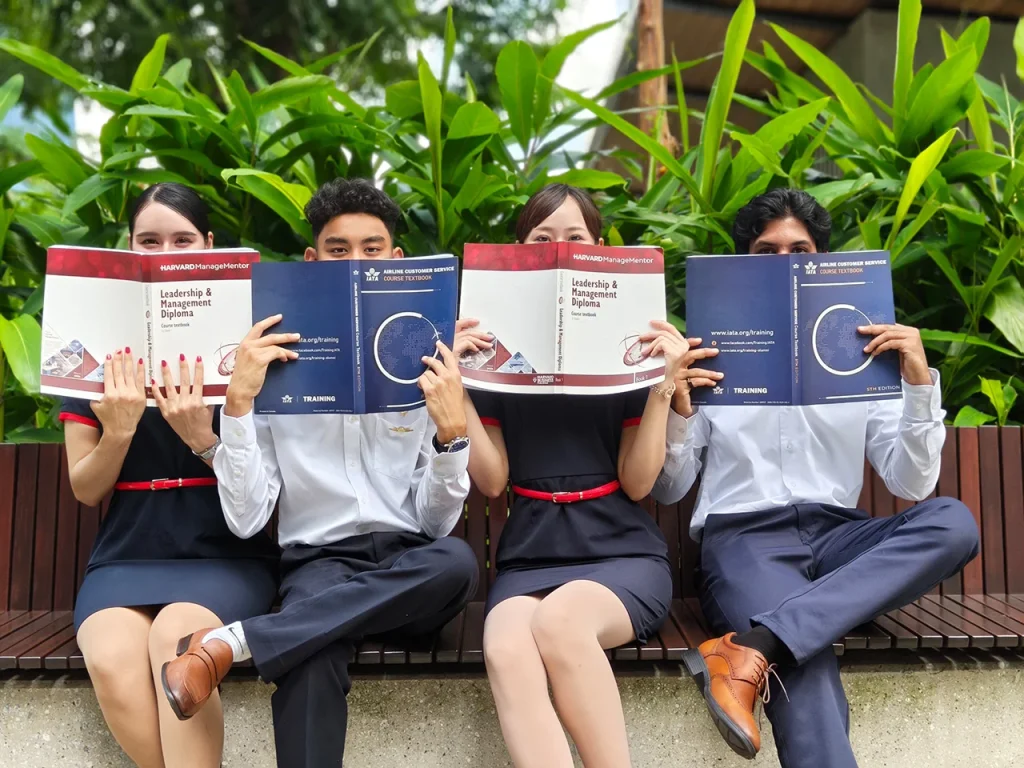
Crew Lounge offers two IATA-certified programmes:
- 1-Year Diploma in Leadership and Management – the full international qualification, covering safety, service, leadership, and management across the aviation industry
- 6-Month Customer Service Programme – focused on service excellence and international airline recruitment preparation.
Both programmes include:
- Safety and emergency procedures to ICAO international standards
- First class and business class in-flight service training
- English for aviation and professional communication
- Airline assessment preparation — group exercises, individual interviews, walk and turn
- Grooming and professional presentation coaching
- Personal CV and interview preparation with Crew Lounge founders Karim and Mimi for every student who secures an airline interview
- Access to Emirates and other airline open day events through Crew Lounge’s recruitment network
FAQ
Yes. Several Crew Lounge graduates arrived at beginner or lower-intermediate English and closed the gap during the programme, immersion is specifically what makes that possible in the timeframe available, rather than trying to reach fluency through classroom study alone first.
Often, yes, in the short term but the comparison worth making isn’t just cost, it’s outcome. Any airline school in Japan teaches English as a subject; training in Malaysia builds the specific skill international airlines actually test for, which is functioning in English outside a lesson structure
Every student who secures an airline interview goes through personal CV preparation and interview bootcamp with Crew Lounge founders Karim and Mimi, both former recruiters for major international airlines, on top of the core IATA-certified programme. Full fees and preparation details are covered in your free consultation.
It varies by starting level, but full immersion accelerates the timeline meaningfully compared to scheduled lessons alone. Full programme length and structure are covered in your free consultation.

Start Here
An online CA course can teach you English. Training in Malaysia puts you inside it, every day, for the length of the programme, which is closer to what an international airline interview will actually ask of you.
The next step is a free consultation with Crew Lounge in English or Japanese.
Book Your Free Consultation → Prefer to message first? Find us on LINE.
Crew Lounge is an IATA Premier-accredited cabin crew training academy based in Petaling Jaya, Malaysia. Our graduates are currently flying with Qatar Airways, Emirates, Singapore Airlines, Etihad Airways, Cathay Pacific, Malaysia Airlines, and more.